Somewhere in Inglewood, an Iranian player scored a goal against Belgium this summer. For a few seconds, it was a goal. Then the video assistant referee stepped in, the replay froze the moment, and the goal was gone – because a body part, marginally, had been in the wrong place at the wrong time.
A few days later, in another match, a Colombian goal was disallowed over an offside toe.
We kept having this same experience at the World Cup 2026: the ball goes in, the stadium rises, and then it sits back down again to wait. Not for a player. But for a review.
Two German words that explain the whole tournament
In his latest book "Situation and Constellation – On the Disappearance of Human Agency" German sociologist and political scientist Hartmut Rosa already touches upon the World Cup's biggest controversy:
His book draws a line between two German words: Situation and Konstellation. A situation is something you act in. You read it, feel your way through it, draw on judgment that was never written down anywhere. A constellation is something you execute – parameters, criteria, prescribed steps. You don't act inside a constellation. You just carry it out.
Rosa's own examples are almost defiantly ordinary. Cook with a Thermomix instead of your own hands, and the machine decides what used to be yours to judge. Drive with Google Maps instead of your own sense of the road, and the same three qualities quietly go unused: judgment, a calibrated eye, a feel for the moment. He uses this exact trio – Urteilskraft, Augenmaß, Fingerspitzengefühl – to describe what a situation asks of you, and what a constellation doesn't need from you at all.

His argument is that modern life keeps converting situations into constellations on the theory that this makes things fairer and more consistent, but that something real gets lost every time it happens.
The screen keeps on winning
The way Rosa frames it: video review overrides the referee's on-the-spot judgment, and the crowd's celebration stops being a real thing that happened the moment the ball crossed the line. It becomes provisional – a ghost of a celebration – until a screen somewhere approves it.
That's not just a nice turn of phrase. It's a fairly exact description of what actually happened at this years' World Cup. One of the most contentious matches of this tournament was Egypt against Argentina: Egypt led for most of the game, scored what looked like a decisive second goal in the 58th minute, and had it wiped out after VAR reversed a foul call from earlier in the build-up, on the other side of the pitch. Argentina went through. Egypt said afterwards they'd been robbed. Nobody broke a rule. The system did exactly what it was built to do. And it still felt like something had been taken.
Football didn't get less fair by adopting VAR. It got more accurate – clear handballs get spotted, marginal offsides get caught, sometimes by a toe. What it lost was Spielraum: literally, "room to play." The word means both the physical space a footballer has to work with and the discretion a referee has to read a situation instead of just measuring it.
This was never about football
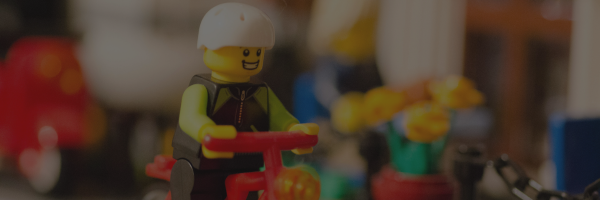
Rosa's bigger claim is that this trade shows up everywhere, and that it has a cost we're only beginning to name. He connects it to burnout – his argument being that exhaustion doesn't come from too much work, but from too little real action: from spending your day executing constellations instead of acting inside situations you're actually trusted to judge. He even reaches for something as ordinary as a LEGO set: build strictly from the instructions and everyone ends up with an identical, perfect ship, and nobody built anything, in the sense that matters.
That's the part worth sitting with past the final whistle. Most organisations are running some version of the hamster wheel: replacing a judgment call with a review stage, replacing "we think this is right" with "we can prove this is right." Each individual step is reasonable. The accumulation of them is a workplace where nobody gets to act, only to execute, and where the exhaustion that follows has nothing to do with the hours worked.
So maybe the question worth asking isn't whether VAR is good or bad for football. It's smaller and harder than that: where else have we quietly swapped Spielraum for certainty, and what did we assume we'd get back, once the decision was finally confirmed?
.png)